Before you read this review of the first book in the new series by Lemony Snicket, ask yourself these questions:
1. Did you read Lemony Snicket's previous book, WCTBATH?
a) Yes.
b) What bath?
2. Can two people be in the same place at once?
a) No, of course not!
b) Wait, who's the person?
3. Can you make invisible ink?
a) With a good amount of lemons, yes.
b)
4. What does a failing company, several missing people, and a biting tadpole have to do with anything?
a) Um... 2 more books?
b) Spoilers.
WDYSHL, or When did you see her Last, is the sequel to WCTBATH, and follows the story of Lemony and Theodora trying to track down Cleo Knight, a chemist whose family runs the ink business in Stain'd-by-the-Sea. Lemony and Theodora visit the Knight's house, but find out the Knight parent's apothecary has drugged them to the point they are practically incoherent. From there, Lemony gets two leads: one from Polly Partial, the grocer, and another from Jake Hix, who works at the diner in Stain'd-by-the-Sea. Both Polly and Jake claim to have seen Cleo that morning, Polly without her fancy Dilemma, (a car) and Jake with. The Bellerophon brothers, nicknamed Pip and Squeak, give evidence that Jake's witness is correct when they tell Lemony that Cleo did not ride their taxi. He asks them for a ride to the Mallahan Lighthouse, where he asks Moxie to give him a haircut. Confused, Moxie complies. Through a series of events which include foreshadowing for the next book, Snicket gets arrested, which leads to the Mitchums lining up Stew, Lemony, and Moxie and asking Polly Partial to pick the thief. When Polly thinks Stew is the thief, the Mitchums are enraged. This confirms that not only is Polly a terrible witness, but the Mitchums won't arrest their son, no matter what he does. Therefore, it is set in stone that Jake's witness was the true one. Lemony then goes to the library with Moxie. There, Moxie learns about Colonel Colophon (Hey look! ASOUE alliteration!) a teetotaller who was a hero in a war, then hospitalized due to a terrible bombing over a dispute about a statue. Lemony finds a suspicious figure lurking outside the library an goes to investigate. She leads him to a building where he finds Ellington, who is disguised as Cleo Knight. Lemony offers to help her escape, which takes time to involve another piece of foreshadowing for the 4th book. They meet up at Black Cat Coffee, where Lemony gives her the Bombinating Beast again. The Mitchums catch up to them, and Stew reveals that he is working with Hangfire. Meanwhile, back at the ranch, Moxie is furious with Lemony as Lemony promises to explain everything while they go to Hungry's again. Jake reveals all he knows to Lemony, that he and Cleo are dating, and that Cleo went to Handkerchief Heights to continue her research on invisible ink, but he tells Jake that Cleo never arrived there. Moxie and both go to Colophon Clinic, where he runs into Colonel Colophon himself, who turns out to be Hangfire. Hangfire almost throws Lemony out a window, but Jake bursts in with Cleo's Dilemma, causing the building to almost collapse. Lemony and Jake both find Cleo, who has cornered the Knight's apothecary. He had Nurse Dander, who wounded Moxie with a knife, are both arrested.
The summary was super long, I know, but I'm going to make this short because, well, I don't feel like I have much to add to my previous review. Jake is a lot like Moxie, supportive but not a pushover, Ellington is as dubious as ever, and Theodora is as ignorant as she was in the last book. Cleo was a bit different, and making her strong, and clever (and not just in chemistry, either!) is a reversal on social norms. In fact, this book does make an effort to hone that in. Theodora mentions many times how "un-man-like" Lemony is, with his interest in a clue in the form on Cleo's clothes and his loyalty to Ellington. Jake, the man, is given the kitchen duties, and Cleo is the person that does her job outside. This continues ASOUE's trend of inserting serious issues into kid's books (responsible consumption of media, grey ethics, discrimination of disabled), this time addressing gender roles, but not for the first time. ("My sister is a nice girl, and she knows how to do all sorts of things." —Klaus Baudelaire, The Reptile Room)
Stew gets a major leap in this book, heck all of the Mitchums do. Stew has his parents wrapped around his finger. The Mitchums outright refuse to acknowledge that Stew can do any wrong. You know what this reminds me of? Ishmael and the islanders from The End. Ishmael has the islanders under his control, and everyone agrees with him, no matter what. (Or at least, until the Baudelaires show up) The islanders, if they really want to, can mutiny and force Ishmael off the island (which they almost do), just like the Mitchums can turn Stew in. The one thing that's hindering them from doing so is the islanders' attachment to a safe haven, like the Mitchums' attachment to Stew. As for Stew's huge dip down, here we learn that Stew is working with the Inhumane Society, calling another parallel to Carmletia Spats, who joined Olaf. As Lemony himself put it, "We are all told to ignore bullies. It's something they teach you, and they can teach you anything. It doesn't mean you learn it. It doesn't mean you believe it. One should never ignore bullies. One should stop them."
In conclusion, I really liked this book. Is it as good as ASOUE? How will this connect to the rest of ASOUE? What's caviar? You might say that those are All the Wrong Questions.
Wednesday, March 29, 2017

All the Wrong Questions: Who could that be at this Hour? by Lemony Snicket
Before you read this review of the first book in the new series by Lemony Snicket, ask yourself these questions:
1. Did you read Lemony Snicket's previous series, A Series of Unfortunate Events?
a) No.
b) Why do you ask?
2. Did you enjoy Lemony's writing style in his previous books?
a) Yes.
b) Yes, a word which here means, "I enjoyed Mr. Snicket's report on the Baudelaire orphans very much.
3. Do you believe the world can be portrayed in black and white?
a) It depends on how you look at it.
b) No, it should be shown in blue as well, with the occasional orange.
4. Who should you trust and who should you not?
a) Wait, wasn't this answered in the 12th book in the last series?
b) No one.
WCTBATH is the first book in ATWQ, a four book series documenting the story of young Lemony Snicket's time in Stain'd-by-the-Sea as an apprentice to VFD. In the beginning, his apprenticeship is supposed to take place in the city with his sister Kit. However, his real chaperone is S. Theodore Markson, and his actual chaperone takes place in Stain'd-by-the-Sea. Stain'd-by-the-Sea is a run-down town no longer by the sea—the sea has been drained to save the last of the octopi to squeeze ink. The first case they tackle is the theft of the Bombinating Beast, which Sally Murphy claims to have been stolen by the Mallahans. However, when Lemony and Theodora investigate, it turns out the statue actually belonged to them. Moxie, the Mallahan's daughter, even shows the statue to Lemony herself, among various other trinkets related to the beast. Theodora, still unconvinced, insists on sneaking in late at night into the Mallahan Lighthouse and stealing the beast. They do just that, while escaping using a rope suspended in the air. Lemony falls but is rescued by a girl named Ellington. When Lemony tells her about the statue, Ellington suggests she mail it to him at the Lost Arms, the place he and Theodora were staying at. However, this turns out to be a lie, as Ellington mailed it to herself at the Black Cat Coffee, a cafe in Stain'd-by-the-Sea. Lemony catches her in time and asks why she tricked him, which she replies that it was the only way to save her father. Lemony gives the statue back to Moxie, but it turns out to be a bag of coffee, and Ellington has the statue now.
If you've read WCTBATH, you'd know that I'd left out some somewhat crucial scenes here: the butler at the Sallis Mansion, who turns out to be Hangfire. We also learn here that he is able to imitate voices. He's actually the largest frame on the front cover, actually. I think it's a shame we didn't get much insight on him as a villain. Oh well, that's what the 3 books are for!
Another important character I didn't mention was Dashiell Qwerty. (Okay, Snicketverse has really weird name) He's not the average librarian, I think, with the leather jacket with metal pieces and scissor-carrying maniac encountered hair. He's actually a bit like Prosper Lost, who I think Lemony kind of scoffs a bit at whereas Qwerty he respects because he is a librarian. They're both vague and have good intentions, though Prosper does come off as a rather nosy person, but, once again, without any malicious intent.
A less pleasant character we get introduced to after we meet Dashiell Qwerty is Stew Mitchum. He's like the Carmeltia of ASOUE: nasty, short-tempered, the bully character. There are a few differences, though. In Carmeltia's case, she's basically a spoiled little brat, whereas Stew seems downright evil. His two-sided personality, however, is probably what makes them most different. (And makes me hate Stew more) Carmeltia, down to her last page, was, as I've said, a spoiled little brat. On the other hand, Stew is an adorable little angel (*throws up in a toilet bowl and comes back*) when his parents are around. Instead of becoming annoyingly spoiled, Stew seems to be cleverer than that, taking the Mitchum's doting to his advantage.
Continuing with ASOUE's trend of having idiot adults *cough* Mr. Poe *cough*, here we get the Mitchums and Theodora both looking down at the children. While admittedly, the Mitchums look down at everyone who isn't their kid, including their own spouses. Theodora looks down on everyone who isn't a full-fledged member of V.F.D. The Mitchums and Theodora, not to mention the aforementioned Mr. Poe are all similar in the regards that they seem to think that they are excellent at their jobs (which they are not) and that children are silly and stupid (which they are not).
Moxie is great. She's supportive but not a pushover, and is very smart to a level in which Lemony himself respects. I'm also supposed to assume that she's a Duncan Quagmire parallel with the journaling. Like with Hangfire, she doesn't have a lot of character development, but we'll get to see some more of her in the later books.
Ellington is... a grey area, really. She's sneaky, determined, and has a solid reason for doing the things that she does. This plays on the actions vs. intentions, akin to the inner conflict the Baudelaires have in the later part of the series. Sure, Ellington did trick Lemony, but so did the Baudelaires to Hal. That doesn't make the Baudelaires villains, but it definitely makes the reader and themselves question their morality. To be honest, the grey morality is what makes the Snicketverse great, and I'm glad ATWQ didn't lose it.
Now... to Lemony Snicket himself. Honestly, I shouldn't be surprised at this pointed that each Snicket book leaves me with more questions and answers. In ASOUE, Lemony is almost a cowardly, melancholy person that never got over Beatrice. Here, he's about as innocent as a member of V.F.D. can get, snarky, prideful, and sarcastic, yet every snarky/sarcastic comment is actually a bit humorous, and is always meant to drive a point. This really makes readers want to know, What happened? Was Beatrice's death enough to turn a boy like this into a state like Lemony's? Or did something else happen?
It seems like we'll never know in Snicketverse, which is... okay, really. That's pretty much the Snicketverse's motto: We'll never know. (Along with it's secondary motto: Logic? What's that? Seriously, in what universe you do not just grab a stolen item that was handed to you on a sliver platter?)
1. Did you read Lemony Snicket's previous series, A Series of Unfortunate Events?
a) No.
b) Why do you ask?
2. Did you enjoy Lemony's writing style in his previous books?
a) Yes.
b) Yes, a word which here means, "I enjoyed Mr. Snicket's report on the Baudelaire orphans very much.
3. Do you believe the world can be portrayed in black and white?
a) It depends on how you look at it.
b) No, it should be shown in blue as well, with the occasional orange.
4. Who should you trust and who should you not?
a) Wait, wasn't this answered in the 12th book in the last series?
b) No one.
WCTBATH is the first book in ATWQ, a four book series documenting the story of young Lemony Snicket's time in Stain'd-by-the-Sea as an apprentice to VFD. In the beginning, his apprenticeship is supposed to take place in the city with his sister Kit. However, his real chaperone is S. Theodore Markson, and his actual chaperone takes place in Stain'd-by-the-Sea. Stain'd-by-the-Sea is a run-down town no longer by the sea—the sea has been drained to save the last of the octopi to squeeze ink. The first case they tackle is the theft of the Bombinating Beast, which Sally Murphy claims to have been stolen by the Mallahans. However, when Lemony and Theodora investigate, it turns out the statue actually belonged to them. Moxie, the Mallahan's daughter, even shows the statue to Lemony herself, among various other trinkets related to the beast. Theodora, still unconvinced, insists on sneaking in late at night into the Mallahan Lighthouse and stealing the beast. They do just that, while escaping using a rope suspended in the air. Lemony falls but is rescued by a girl named Ellington. When Lemony tells her about the statue, Ellington suggests she mail it to him at the Lost Arms, the place he and Theodora were staying at. However, this turns out to be a lie, as Ellington mailed it to herself at the Black Cat Coffee, a cafe in Stain'd-by-the-Sea. Lemony catches her in time and asks why she tricked him, which she replies that it was the only way to save her father. Lemony gives the statue back to Moxie, but it turns out to be a bag of coffee, and Ellington has the statue now.
If you've read WCTBATH, you'd know that I'd left out some somewhat crucial scenes here: the butler at the Sallis Mansion, who turns out to be Hangfire. We also learn here that he is able to imitate voices. He's actually the largest frame on the front cover, actually. I think it's a shame we didn't get much insight on him as a villain. Oh well, that's what the 3 books are for!
Another important character I didn't mention was Dashiell Qwerty. (Okay, Snicketverse has really weird name) He's not the average librarian, I think, with the leather jacket with metal pieces and scissor-carrying maniac encountered hair. He's actually a bit like Prosper Lost, who I think Lemony kind of scoffs a bit at whereas Qwerty he respects because he is a librarian. They're both vague and have good intentions, though Prosper does come off as a rather nosy person, but, once again, without any malicious intent.
A less pleasant character we get introduced to after we meet Dashiell Qwerty is Stew Mitchum. He's like the Carmeltia of ASOUE: nasty, short-tempered, the bully character. There are a few differences, though. In Carmeltia's case, she's basically a spoiled little brat, whereas Stew seems downright evil. His two-sided personality, however, is probably what makes them most different. (And makes me hate Stew more) Carmeltia, down to her last page, was, as I've said, a spoiled little brat. On the other hand, Stew is an adorable little angel (*throws up in a toilet bowl and comes back*) when his parents are around. Instead of becoming annoyingly spoiled, Stew seems to be cleverer than that, taking the Mitchum's doting to his advantage.
Continuing with ASOUE's trend of having idiot adults *cough* Mr. Poe *cough*, here we get the Mitchums and Theodora both looking down at the children. While admittedly, the Mitchums look down at everyone who isn't their kid, including their own spouses. Theodora looks down on everyone who isn't a full-fledged member of V.F.D. The Mitchums and Theodora, not to mention the aforementioned Mr. Poe are all similar in the regards that they seem to think that they are excellent at their jobs (which they are not) and that children are silly and stupid (which they are not).
Moxie is great. She's supportive but not a pushover, and is very smart to a level in which Lemony himself respects. I'm also supposed to assume that she's a Duncan Quagmire parallel with the journaling. Like with Hangfire, she doesn't have a lot of character development, but we'll get to see some more of her in the later books.
Ellington is... a grey area, really. She's sneaky, determined, and has a solid reason for doing the things that she does. This plays on the actions vs. intentions, akin to the inner conflict the Baudelaires have in the later part of the series. Sure, Ellington did trick Lemony, but so did the Baudelaires to Hal. That doesn't make the Baudelaires villains, but it definitely makes the reader and themselves question their morality. To be honest, the grey morality is what makes the Snicketverse great, and I'm glad ATWQ didn't lose it.
Now... to Lemony Snicket himself. Honestly, I shouldn't be surprised at this pointed that each Snicket book leaves me with more questions and answers. In ASOUE, Lemony is almost a cowardly, melancholy person that never got over Beatrice. Here, he's about as innocent as a member of V.F.D. can get, snarky, prideful, and sarcastic, yet every snarky/sarcastic comment is actually a bit humorous, and is always meant to drive a point. This really makes readers want to know, What happened? Was Beatrice's death enough to turn a boy like this into a state like Lemony's? Or did something else happen?
It seems like we'll never know in Snicketverse, which is... okay, really. That's pretty much the Snicketverse's motto: We'll never know. (Along with it's secondary motto: Logic? What's that? Seriously, in what universe you do not just grab a stolen item that was handed to you on a sliver platter?)
Tuesday, March 28, 2017
Ready Player One by Ernest Cline
I know I should really do my review on The Midnight Star of the Young Elites Trilogy, but that book is in my dorm room that is a full plane ride from where I am typing this one, so I'll just post a new book and then get back to The Young Elites. For now, I present to you:
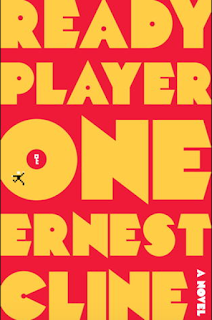

Ready Player One is a science-fiction/dystopian novel, featuring a young boy named Wade obsessed with finding James Halliday's Easter Egg hidden deep inside the virtual reality game the OASIS. In 2044, the real world is a mess, and most of the population spends their time in a video game developed by James Halliday and his partner Ogden Morrow. James Halliday, who was in charge of the entire video game, set up a hunt for an Easter Egg that could be found using 3 keys; copper, jade, and crystal, which opened gates named after the same materials. The first person to find he egg earned Halliday's entire fortune and complete control over the OASIS. Wade Watts is one hunter among many searching for the egg (nicknamed "Gunters"). He competes and eventually allies with, Aech, his best friend and another gunter, Art3mis, a blogger whom Wade had a crush on (and dates at the end of the book) and Shoto, a Japanese stranger whom he becomes friends with. Their biggest enemy, however, is the IOI, a corporation planning to take advantage of the OASIS to make a profit. Together, they beat the IOI, and Wade's avatar Parzival ends up winning the game.
Overall, I enjoyed this book A LOT. The conflict with the IOI makes for decent villain with it's constant death threats that keep the IOI in a less-than-good light and the plot thrilling. Aech and Shoto are also both likeable characters. Aech is very supportive of Wade while not being a complete cliché flat sidekick with his own fun personality, and Shoto is highly respectable with how he deals with the loss of Daito and his dedication to hunting the egg. But undoubtedly, the most fascinating aspect of the book is the world-building. The OASIS is an incredibly intricate video game universe with it's own planets, complete with it's own planets, times, and transportation systems. The level of detail the author puts into describing the OASIS and how it works is brilliant. Not to mention the whole idea of trying to find an easter egg in what is essentially an entire dimension on it's own, is an incredibly original and unique idea. This world reminds me of Antartica in Champion. The world there runs like a actual video game, with points that go higher the more moral things you do. This world seems more like an action RPG, with fighting, mythological creatures, magical weapons, while still having everyday elements in it like school. Ogden was a character I honestly didn't expect, but I liked that his character was written in and was portrayed as not a goof, but a well-meaning man that is still loyal to his friend after the 10 years of falling out and wants to help our main protagonists.
If you noticed my lack of commentary on Art3mis and Wade himself in my previous paragraph, that's because I didn't like them that much. The sudden shifts between Art3mis's braggy, over-confident, "I'm-better-than-you" side and almost shy, "you-won't-like-me-when-you-see-me" and "I'm-going-to-save-world-with-my-money" miff me. As for Wade, I like him most of the time. I really do. However, the part where Wade basically pines and gets distracted by Art3mis from hunting the egg is a huge no. I generally don't like the sappy, clinging-onto-the-first-man/women-she/he likes character, because of those characters are simply ridiculous. Boo-hoo, your crush doesn't like you. Deal with it and move on. Not to mention that throughout most of the book, Wade seemed pretty fixated on finding the egg, and this pining seemed not only beneath him but incredibly OOC as well. I was practically raging when he let Art3mis top him on the scoreboard (in fact, now that I think about it, I raged when he gave her the clue about the jousting as well) because Wade seems to forget that Art3mis is his rival. And while romance is all sweet and cute when it stays in the background, interfering with the plot where romance has NO place is one trope I absolutely hate. At least that only happened for a couple of pages (But wow, those were TERRIBLE pages to bear through). This has to do with the ending, too. The romance was sort of abrupt, and the last time we saw Art3mis before the maze scene was where all their interactions can be called perfectly platonic. And the romance really just comes out of nowhere. I think the author felt pressured to add a romantic subplot because that's what all YA and adult books with a non-related female and male character do. Because God forbid a main character of a YA and adult novel not be in a romantic relationship with someone else.
On a more mixed bag-ish note, the 80's pop-culture references were okay? I mean, I've never been around in the 1980's, so all of my very limited recognition of any song, game, or movie was due to my spending way too much time on the internet and reading way too many books. I didn't really mind not getting most of the references and it was definitely educational.
Overall, I really liked this book, despite it's cringe-worthy moments. I heard that there was a sequel on the rise, so I should read that. Maybe I'll review it when I get my hands on a copy.
Thanks for reading!
Monday, October 3, 2016
The Rose Society by Marie Lu
If I have not made it clear yet, I will now:
 Now, this doesn't I don't like sweet moments between characters, or that I resent happy endings, particularly for those who deserve it. However, peppy and overly optimistic characters just annoy me sometimes. A person just has to accept the fact that they/their loved ones will die one day, and there's nothing anyone can do to stop it. Plus, a lot of them are childish and wish for the nest which makes them more annoying them flies in the middle of the night. I think this is why I enjoy dystopia fiction so much, because there are, more often than not, no too-happy characters. Everyone is serious and cold, with the best having bits of warmth and love and a taste of rational humour.
I HATE PEPPY CHARACTERS.
 Now, this doesn't I don't like sweet moments between characters, or that I resent happy endings, particularly for those who deserve it. However, peppy and overly optimistic characters just annoy me sometimes. A person just has to accept the fact that they/their loved ones will die one day, and there's nothing anyone can do to stop it. Plus, a lot of them are childish and wish for the nest which makes them more annoying them flies in the middle of the night. I think this is why I enjoy dystopia fiction so much, because there are, more often than not, no too-happy characters. Everyone is serious and cold, with the best having bits of warmth and love and a taste of rational humour.
Which leads us to the topic of this post: The Rose Society.
If you have read my last post, you know that I adored the last book, The Young Elites. The sequel is even better. I'll get my thoughts in after the summary.
The Rose Society drops off where it's former left off, as Adelina and Violetta set off to Tamoura to find Magiano, an elite who the word 'magic' is supposedly rooted from. Upon meeting the two, Magiano challenges them to a bet: If they can steal the Night King's diamond pin first, then he will join them. The two manage to do so, but are caught before they can make their escape. When Adelina kills the Night King, rumours of her begin to spread about the White Wolf, and fear of her grows, feeding her power as it eventually begins to overwhelm her. Meanwhile, the Daggers go to the Skylands to ask for the help of the Beldain queen, Maeve, who has the ability to raise the dead. They ask her to bring Enzo back so that he could take the throne, just like they planned to do so. Maeve agrees and they form a plan that leads us to Teren, and Giulietta, the queen of Kenettra before the end of this book and the love of Teren's life. That is, until she suddenly starts ordering the malfettos better treatment. Teren, completely blind to all but his mission to kill all malfettos, disobeys her, which leads to the perfect oppertunity for Adelina to use him. For she, her sister, Magiano, and Sergio, an elite who can control the rain, have formed the Rose Society, a new group of Elites formed by Adelina's promise to give them the Kenettra treasury when she comes ruler. She convinces Teren to let the Roses in, then tricks him into thinking Giulietta is a malfetto, which leads to her death by her lover's hand. Adelina, now in command of Kenettra, turns to fight the armies of Beldain, lead by the Daggers. The Roses and the Daggers fight to the death, with each's desire for the throne. Adelina kills Gemma, and the Roses emerge victorious. Finally, when Violetta informs Adelina of Raffaele's discovery: that the power of the young elites will eventually kill them, she grows furious and drives her own sister out, leaving her, empty inside, with the throne.
The book is fast-paced, action-packed, thrilling and full of betrayals and clashes. There is a dark atmosphere to the book as a whole, as Adelina starts drifting away from the last bit of goodness, the part of her that is horrified at her want to hurt and avenge, and starts to succumb to the dark nature of her powers. It feeds on fear and anger, and the more of that she gets the more her power corrupts. It careens out of control ever so often and when it does, it shows her darkness and her regrets in the most terrifying way possible. Also, the voices in her head, whispering thoughts about chaos and revenge in her head made the book so much more enthralling. Which here means, all the more horrifying. I am not used to reading from a villain's point of view, because there are so few books that even bother to show them, so reading the book was so new to me. The reader can see every thought Adelina has, and sometimes even understand. This makes Adelina, despite being the villain and taking over the throne, somewhat sympathetic and likeable, without going to the ridiculously cringe-worthy sad backstory trope.
Teren's behaviour really surprised me though, as I did not expect him to choose his lifelong goal over love. Perhaps I have been reading too many books where characters do this, but I am perfectly okay with Teren's choices, because as I've said, a lot of what Marie Lu writes is new to me. I can totally see it happening, though, as there is an explanation for why Teren does what he does. He is completely loyal to what he believes is his sacred mission from the gods and nothing else. So much that it was the key factor that betrayed him in the end. The way this was executed was incredible.
Violetta also had a major role in this story. She is the light in Adelina's life, the one thing that kept her sane and from being evil. And it's not by force, either; she doesn't have to use her ability to stop her sister for a while in the book. The way Violetta rushes to Adelina as soon as she learns about Raffaele's discoveries shows she clearly loves her sister, no matter what. That is, until, she kicks her out. This was one time I really wanted to scream at the main character. She was your sister, Adelina! She loved you and was trying to help! What I think will happen now is that Adelina and Violetta will eventually have to face off in the final book, and Adelina, with her overwhelming power, will unleash her ability too hard on her sister, killing her, and leading her to madness.
I knew Enzo wasn't going to be the same when he was brought back. Honestly, the only time I've seen this successful (which means they were exactly the same as they were before they died) was with some high, powerful being like an angel or a Greater Demon *cough* Raziel and Lilith *cough*. Except for that, every time someone is brought back, there is always some ramble about balance and owning of souls to the Underworld or something. I was skeptical at first on how this would even work, and I was very worried when Adelina offered to be Raffaele, and was terrified even when Maeve's theory that Enzo may be able to control Adelina. Personally, I think, because of this, Adelina will have to kill Enzo again in the next book. (I know, she murders a lot in my theories)
As for actual murder, I wasn't expecting Gemma's death. I mean, I understand why she did it, because it was a war and all, and I don't blame her for not sparing Gemma's life, but that doesn't mean I am not upset about it. Gemma and Adelina were like Madge to Katniss in The Hunger Games. The book describes her death in quite a bit of detail, so you can tell even Adelina was shocked by her own actions.
Another death related prediction: Adelina will die of using too much of her power at the end of The Midnight Star. So basically, everyone dies.
Also: A+ cover change. The waves, the wolf in the background. . . LOVE IT.
-Sooyoung Jo, Age 12 (13 soon!)-
Sunday, September 25, 2016
The Young Elites by Marie Lu
Okay, so remember Marie Lu? The author of the Legend trilogy? ( by the way I did a review on) Well, she's back. AND SHE'S GREAT.
 The Young Elites is about a girl named Adelinetta Amouteru, also known as Adelina, who possess a dark ability. A blood fever has swept through her world, leaving the survivors with marks. A few of these marked, called the malfetto, have special powers, and those who have them are called the Young Elites. Adelina is rescued from her own execution by a society of the Elites called the Dagger Society, which is lead by Enzo. While in the process of training to become a member, Teren, the head of the Inquisition Axis, whose goal is to wipe out the Young Elites, blackmails Adelina by threatening to cut her sister, Violetta's throat if she does not give Teren information about the Daggers. Adelina successfully and sometimes unsuccessfully avoids giving Teren what he wants. Finally, she goes to the Inquisition Tower and rescues Violetta herself, but not without learning that Teren and Violetta are Young Elites. Teren then challenges Enzo to a fight, which he accepts. The next day, Adelina, in an attempt to help Enzo, kills him instead, forcing the remaining Daggers to flee. The Daggers decide that Adelina is too dangerous for them and abandon her. Outraged, Adelina leaves of her own accord with Violetta, to, what I presume, form the Rose Society.
I have finally gotten my hands on a copy of The Young Elites, the first book in a trilogy named after the first book. And, okay, IT'S AMAZING. AS GOOD AS LEGEND AND CASSANDRA CLARE. And trust me, I don't just hand out compliments like that. If I say that, then that's a book that's over 9.5 on a scale of 10. I would give this a 9.8, why the -0.2 I'll explain later.
 The Young Elites is about a girl named Adelinetta Amouteru, also known as Adelina, who possess a dark ability. A blood fever has swept through her world, leaving the survivors with marks. A few of these marked, called the malfetto, have special powers, and those who have them are called the Young Elites. Adelina is rescued from her own execution by a society of the Elites called the Dagger Society, which is lead by Enzo. While in the process of training to become a member, Teren, the head of the Inquisition Axis, whose goal is to wipe out the Young Elites, blackmails Adelina by threatening to cut her sister, Violetta's throat if she does not give Teren information about the Daggers. Adelina successfully and sometimes unsuccessfully avoids giving Teren what he wants. Finally, she goes to the Inquisition Tower and rescues Violetta herself, but not without learning that Teren and Violetta are Young Elites. Teren then challenges Enzo to a fight, which he accepts. The next day, Adelina, in an attempt to help Enzo, kills him instead, forcing the remaining Daggers to flee. The Daggers decide that Adelina is too dangerous for them and abandon her. Outraged, Adelina leaves of her own accord with Violetta, to, what I presume, form the Rose Society.
Now to the fun stuff.
The biggest reason I love this book is because IT SMASHES ALL THE CLICHES INTO A MILLION PIECES. Okay not all of them but most.
First, Adelina isn't a sort of goody-goody girl that tries to defy her own dark nature. The reason I get tired with goody-good characters is that they REALLY BUG ME. Like, YOU HAVE THE POWER TO DESTROY THINGS AND STUFF GIRL, STOP WHINING AND USE IT TO MAKE A CHANGE FOR GOD'S SAKE I'M LOOKING AT YOU JUILETTE!! While Adelina does have good intentions, making her likeable, she isn't pathetic and doesn't act desperate. She knows that she has powers and isn't afraid to use them. She doesn't go through the exhausting 'embrace your powers and don't push them away' journey that ALL supernatural powered humans seem to go through, but, hell, she doesn't even acknowledge that phase! She accepts who she is right away, and decides she is going to use it. And she is not going to let anything stop her. Not even a boy, which leads me to my second reason why I adore this book.
NO. ANNOYING. LOVE TRIANGLES.
When I first finished this book, I realized there was no love triangle in the plot, and I went, "Wait, a book with two charming boys, both of which are around the main female's age group, THAT DOES NOT HAVE A LOVE TRIANGLE? WHY HAS THIS BEEN SO DIFFICULT?! THANK YOU MARIE LU. THANK YOU."
Now, I do know there is a romantic arc with Enzo and Adelina, and I'm pretty sure some people can argue that Enzo and Raffaele was not platonic, but even if it was, it didn't affect the plot. AND THAT'S WHAT MATTERS. Raffaele could have kissed Enzo a million times before Adelina for all I care, it didn't affect the book, so it's pretty much nonexistent to me.
Another thing I want to address: This book takes the line between black and white, grabs a sponge, and RUBBED IT RIGHT OFF LIKE THE LINE WAS MADE OF SOME really easily erasable substance BUT YOU GET MY POINT. In this book, no one is a saint. In this book, no one avoids doing anything cruel. For those who are going, "What about Violetta?", Even sweet little Violetta harms Adelina in when their father was alive, even though she didn't mean it. In fact, no one means to do any harm to anyone in this book, but THAT DOESN'T STOP THEM FROM DOING IT. It shows that in this world, and in ours, in some ways, no one is an angel and is capable of wrong doing somehow. That there are few people who will do everything for you and your own sake. The only person who has managed this so far is Lemony Snicket, and as you guys know, I adore this author, and so this is a high compliment I hardly ever offer.
Now for the grilling. To be honest, I kind of predicted the whole 'Violetta and Teren' thing, because it's happened in a lot of books, and I also guessed it has something to do with defending. Maybe I shouldn't have read Shatter me before I read this book. Probably not.
Another thing I really wanted but didn't get was more background on the other Daggers, like Star Thief or WindWaker and even Spider. We focus a lot on Adelina's past, but rarely on any of the other's aside from those two, -0.1 points each, I loved it.
Also, I never thought I said this, but THIS BOOK HAS A BAD COVER LIKE JOHN GREEN. Seriously, the COVER DOES NOT REFLECT THE AMAZINGNESS THAT IS INSIDE LIKE ALL THE JOHN GREEN BOOKS. It deserves to be more epic like the Shadowhunter Chronicles new covers, or the Magisterium Series covers.
Finally, I should mention this book has the most incredible quotes ever.
My fury heightens. Everyone. They will cower at my feet, and I will make them bleed.
I am tired of being used, hurt, and cast aside. It is my turn to use. My turn to hurt.
No one ever gives my their kindness without hoping for something in exchange.
Are they any different? Are they all the same? They all want to use you, use you, use you until they get what they want, and then they will toss you aside.
So. Tell me, little wolf. Do you want to punish those who have wronged you?
*sighs* I suppose the real question now is:
Do I get All the Wrong Questions or this trilogy for my birthday?
-Sooyoung Jo, Age 12-
Sunday, September 11, 2016
Shatter Me by Tahereh Mafi
 Okay, I take back what I said about how I pretty much loved anything dystopian fiction all those posts ago.
 Shatter Me was not what I expected. At all.
I had heard of Shatter Me, and heard it was really great. When I found it in my school library, I was thrilled. My expectation rose at the cover. A simple eye staring at the reader was intriguing indeed. And that was not even mentioning the stuff around the eye! It was very creative, the way the cover captures the reader.
Now onto to the book. As I'm sure you can guess, I did not like it. Did I hate it? No, I don't hate books. Whether or not my personal taste, the author worked hard on the book, so I respect them for it. But I must admit the book failed to meet my expectations. I gathered this book to be roughly a A, but this book only gets to a rough C+. There are some reasons why.
1. Juliette
The hero can save everyone in the book, but if they can also spoil the book itself. And while I wouldn't say the Juliette wrecked the story, she did, admittedly, kind of dip in the unlikeable area for me. I think this is an issue that a lot of people had with Mockingjay, where many said Katniss didn't do anything except wind up in hospitals and get knocked out. I refuted this argument in my review, but I admit it applies here. Everything Juliette does is because a) She has no choice b) Because Adam says so. I'll get to that later. SHE NEVER DOES ANYTHING OF HER OWN WILL. Okay, that is kind of the point, but still. YOU HAVE A DEADLY TOUCH GIRL. USE IT. PLEASE. If anyone like Katniss or June or Tris had this gift, they would have run with it. Literally. But Juliette had to go, "Oh, I don't want to kill people, oh, I'm cursed, oh—" GAHHH. Okay, that was actually more contemptuous than I meant it to be. Even though, I couldn't help but screaming at the girl to JUST START RUNNING. TO RUN AND NEVER LOOK BACK. OR MAYBE FIGHT BACK LIKE IT SAID ON THE COVER?! Maybe I shouldn't have read Throne of Glass and reread Legend before reading this, maybe, but still.
I swore I would come back to Adam and Juliette. To be honest, Adam and Juliette's relationship kind of got tiring after a while. "Oh, I would do everything for her, I would do everything for him WHEN YOU'VE MET FOR LIKE, A WEEK?! I know, Adam noticed her before, but it was brief and it was when they were young. Also, I want to point out that ADAM was the one that brought her to Warner. Warner whom she tried to kill later? Um, please? I like my girls sassy and badass, thank you. Not boo-hoo run-to-their-boyfriend-girls. Please.
2. Adam
Adam was. . . okay. Okay as in the middle of good and bad but kind of leaning towards the bad side. I was fine with Adam in the beginning, but with the end with Kenji, well, I should probably start with why I like Kenji.
3.Kenji
This guy is my favorite character, tops. He's kind of an asshole in the beginning, but I really liked the way he interacted with Juliette. Kenji reminds me of Jack Harkness (I watch Doctor Who, not Torchwood, sorry), with his flirty nature and almost always able to snap back into captain mode like a rubber band. He is also the only character who does things for the greater good and not love, having a sense of responsibility and yet always able to make readers laugh. He also means well, no matter what he does.
Back to Adam. Adam was kind of an ass to Kenji in the end. I understand why he did it, it's just, well, Adam was rather harsh. He is very stubborn and puts James and Juliette first, everyone else second. But that does not mean you get to be a bitch to everchyone second. And he was a very, very, very big bitch.
4. James
Speaking of James, I LOVE THIS KID. Him and Castle are neck-to-neck in terms of second-favorite character. James is like Primrose from The Hunger Games, except more innocent and more childlike. I don't know if the situation in THG is worse than the one in Shatter Me so maybe that's why Prim is more adult-like than James, but I really don't mind James. I normally LOATHE characters who are stupid, even a little bit, heck, I used to hate the Percy Jackson and the Olympians because of that. But I really miss innocent, sweet, loving young characters in dystopia so I'm fine with it.
5. Castle
Well, considering that everyone except James and Kenji I didn't like, it's so surprise that Castle is one character I really enjoyed. He's calm, collected, mature, not an asshole to anyone throughout the story, which is all I need for adult males to be likeable for me. (Fighting's a bonus but it's better if you have them. If he loves books as well, high chance I'll LOVE reading about him)
6. Warner
The only person I haven't talked about is Warner, which is strange, because he is one of the main characters. Warner is, well, I don't know what to think. He's creepy, what with his 'oh you'll fall in love with me I promise' reminds me of Sebastian from The Mortal Instruments. Egh. If someone makes an incest joke about this I am going to flip. He's also passionate about the things he does (killing, torture, etc.) and I'm willing to bet he was some sort of broken past that made him that way, (you know, cliche abusive parents, etc.). By now I'm sure you think that I think he's nothing but a bundle of cliches, and, to be honest, he is BUT IN A GOOD WAY. Everyone talks negatively about cliches but Tahereh Mafi manages to mix all that, and make it into some unique. And I have never read anyone like Warner, let me tell you. Creepypasta/erratic love maniac/robotic order follower is like having nut bread and regular butter and blueberry jam as a sandwich. (No idea if this combination is actually good or not, just a metaphor)
Also, I bet one of these characters die in the future. Probably not Warner or Adam or Juliette, though the other three are highly likely. in my experience with dystopian fiction, that happens. People die. A lot.
Well, that's it for today. I'll probably move on to getting the rest of the series. I hope you come back for more reviews!
-Sooyoung Jo-
Sunday, August 28, 2016
Fangirl by Rainbow Rowell
In the past, I have tried not to fangirl over couples or plot events in books, because I like evaluate material calmly. But, considering the title of the book, an exception, I think, is needed. So I will probably use fangirl words like ship, fanfic, fandom, etc. I will define the words ahead of time for those non-fangirls. Okay? Okay. (I will do it one day, I swear)
Words you need to know (Consider it a free vocabulary lesson!)
ship: 1. the act of wanting two people (fictional or otherwise) to be in a romantic relationship
2. a couple
fanfic: short for fanficiton, which means fiction written by fans of a fandom. This can be from fluff to alternate dimension, to crossovers (not important here, search them on urban dictionary)
fandom: a group of fans, like a kingdom of fans
canon: Something that has been confirmed by the original source. In other words, it's undeniable.

I shall be honest with you: I am a full-out, proud fangirl. I have many fandoms and I write fanficition(I actually do, though I don't get any views). And that leads to the fact that Cath is the most relatable character I have ever read. I have a Hunger Games review on my blog (you should go check it out) and there, I've mentioned that Katniss is such a relatable character because we have similar personalities and opinions. But Cath BLOWS. KATNISS. OUT. OF. THE. WATER. Literally. It may be the fact that I'm an asocial nerd who loves to read. I could imagine myself saying the words Cath says and thinking what she thinks. Heck, I even write LGBT+ fanfiction! (AND I REGRET NOTHING)
I SHIPPED CATH AND LEVI BEFORE IT WAS COOL. From the moment I opened the book and read the page with Levi, I was like, 'Those two are getting together!' And they did! Boy, I was mad when Cath refused to see Levi when he kissed that blond. I'm not sure who I was mad at specifically, probably at the author for breaking the ship up (although it technically wasn't canon yet). That happens a lot when you're a fangirl . Like, I was so mad at John Green when he did that thing in TFIOS. . . oh wait, wrong book.
Anyways, my point is that I STILL SHIPPED IT when Cath still thought Levi was Reagan's boyfriend. It was like in City of Bones where that thing, you know that thing, happened, I won't put here because spoilers, (You do NOT want to spoiled though, that spans on for half the Mortal Instruments)
Speaking of Reagan, I really like her. She influences Cath just like Alaska does to Miles in Looking for Alaska, getting Cath to do things she would have never done without her. She is very supportive of Levi and Cath's relationship, which is a huge difference from the cliche 'jealous ex-girlfriend' characteristic. She's scary, but she's also a generally well-rounded person, like a sister who pretends to be too sophisticated for Cath but does look out for her.
Speaking of sisters, I don't know what to make of Wren. Wren does seem kind of keen on losing Cath, keeping her away from her social life, (FANDOM BEFORE FRIENDS #fangirlogic) which made me, well, not hate, but largely dislike Wren. She acted like the whole, 'Oh I'm the better sibling who hangs out with boys and gets invited to parties' cliche girl WHICH I JUST LOATHE. But she did make up for it in the end.
Now, as not only a fangirl but as a human being, I must admit we were all wrong, wrong about all of it at one point in out lives about something. And this time, it was Nick. At first, I liked Nick, thought he was a really great person. I can't say I shipped Cath and him because I was too obsessed with Cath and Levi, but I was like, 'yeah, they could have like a friendly, collaborating writer relationship'. And then, the bomb came. JUST AN EDITOR?! HELL, NO. Nick, that back-stabbing little bastard son of a– sorry, I'll go wash my mouth with soap.
Okay, now my mouth is super soapy and I think I can write about Nick without cussing, I should probably mention I hate him. I loathe him. I abhor him. I despise him. I detest him. I feel malice to him. I can't stand him. I begrudge him. I want to toss his silly little mundane/mortal/muggle body into the depths of Tarturus and Edom and the Arena and the Maze and the Scorch and Skaro and Hell and Azkaban and– okay I think that's enough. I swear I'll stop.
That's probably enough with my character review of Nick, though I must mention I went, "YEAH, THAT'S WHAT YOU GET YOU UNGRATEFUL BASTARD! YOU RULE CATH!" when Cath turned Nick down with the story at the end. I truly enjoyed that moment.
Now I must shut up and stop fangirling and become a proper book reviewer again. Oh well, it was good while it lasted.
–Sooyoung Jo–
Words you need to know (Consider it a free vocabulary lesson!)
ship: 1. the act of wanting two people (fictional or otherwise) to be in a romantic relationship
2. a couple
fanfic: short for fanficiton, which means fiction written by fans of a fandom. This can be from fluff to alternate dimension, to crossovers (not important here, search them on urban dictionary)
fandom: a group of fans, like a kingdom of fans
canon: Something that has been confirmed by the original source. In other words, it's undeniable.

I shall be honest with you: I am a full-out, proud fangirl. I have many fandoms and I write fanficition(I actually do, though I don't get any views). And that leads to the fact that Cath is the most relatable character I have ever read. I have a Hunger Games review on my blog (you should go check it out) and there, I've mentioned that Katniss is such a relatable character because we have similar personalities and opinions. But Cath BLOWS. KATNISS. OUT. OF. THE. WATER. Literally. It may be the fact that I'm an asocial nerd who loves to read. I could imagine myself saying the words Cath says and thinking what she thinks. Heck, I even write LGBT+ fanfiction! (AND I REGRET NOTHING)
I SHIPPED CATH AND LEVI BEFORE IT WAS COOL. From the moment I opened the book and read the page with Levi, I was like, 'Those two are getting together!' And they did! Boy, I was mad when Cath refused to see Levi when he kissed that blond. I'm not sure who I was mad at specifically, probably at the author for breaking the ship up (although it technically wasn't canon yet). That happens a lot when you're a fangirl . Like, I was so mad at John Green when he did that thing in TFIOS. . . oh wait, wrong book.
Anyways, my point is that I STILL SHIPPED IT when Cath still thought Levi was Reagan's boyfriend. It was like in City of Bones where that thing, you know that thing, happened, I won't put here because spoilers, (You do NOT want to spoiled though, that spans on for half the Mortal Instruments)
Speaking of Reagan, I really like her. She influences Cath just like Alaska does to Miles in Looking for Alaska, getting Cath to do things she would have never done without her. She is very supportive of Levi and Cath's relationship, which is a huge difference from the cliche 'jealous ex-girlfriend' characteristic. She's scary, but she's also a generally well-rounded person, like a sister who pretends to be too sophisticated for Cath but does look out for her.
Speaking of sisters, I don't know what to make of Wren. Wren does seem kind of keen on losing Cath, keeping her away from her social life, (FANDOM BEFORE FRIENDS #fangirlogic) which made me, well, not hate, but largely dislike Wren. She acted like the whole, 'Oh I'm the better sibling who hangs out with boys and gets invited to parties' cliche girl WHICH I JUST LOATHE. But she did make up for it in the end.
Now, as not only a fangirl but as a human being, I must admit we were all wrong, wrong about all of it at one point in out lives about something. And this time, it was Nick. At first, I liked Nick, thought he was a really great person. I can't say I shipped Cath and him because I was too obsessed with Cath and Levi, but I was like, 'yeah, they could have like a friendly, collaborating writer relationship'. And then, the bomb came. JUST AN EDITOR?! HELL, NO. Nick, that back-stabbing little bastard son of a– sorry, I'll go wash my mouth with soap.
Okay, now my mouth is super soapy and I think I can write about Nick without cussing, I should probably mention I hate him. I loathe him. I abhor him. I despise him. I detest him. I feel malice to him. I can't stand him. I begrudge him. I want to toss his silly little mundane/mortal/muggle body into the depths of Tarturus and Edom and the Arena and the Maze and the Scorch and Skaro and Hell and Azkaban and– okay I think that's enough. I swear I'll stop.
That's probably enough with my character review of Nick, though I must mention I went, "YEAH, THAT'S WHAT YOU GET YOU UNGRATEFUL BASTARD! YOU RULE CATH!" when Cath turned Nick down with the story at the end. I truly enjoyed that moment.
Now I must shut up and stop fangirling and become a proper book reviewer again. Oh well, it was good while it lasted.
–Sooyoung Jo–
Thursday, August 11, 2016
Lemony Snicket: The Unauthorized Autobiography
A notorious spin-off to a notorious series, LS:AA is a collection of notes, drawings photographs, lists, music sheets, movie scripts, newspapers, tickets, letters, files, and other mysterious –a word which here means, "abstruse"–a word which here means, "cryptic"–a word which here means, "mysterious"–sources of information. A notorious spin-off to a notorious series, LS:AA leaves more questions in the reclusive world of V.F.D. than ever before. Composed of 13 chapters, readers of this book, a phrase which here means, –"something that should not exist under ANY circumstances"–will uncover more secrets about Lemony Snicket, discover unimaginable rumours, and various other pieces of information that should never be read.
But then again, when have we ever followed Lemony's orders?
 We start off with a introduction by Daniel Handler, who is Lemony's legal representative. We soon develop into a rather unusual story which ends with the 13 chapters of the novel. It seems as if Lemony has already gone through the book as corrected all the chapter titles. Whether this was done out of concern for his readers or for his life, I do not know. That is a phrase I will be using rather frequently.
There are many things I want to talk about, but the first is the ballad entitled The Little Snicket Lad. It is a ballad about how Lemony was taken by V.F.D. when he was still a baby. While Lemony does tip us off about just how the three Snicket siblings of V.F.D. came to be, we still get very little information, a technique I suppose V.F.D. taught him themselves. One question I've always had is why the ballad was made in the first place. Why would there be a song about Lemony? Is there one for the other Snickers too? Maybe there are coded messages in the other ballads like there are in Sebald's movie scripts? Speaking of movie scripts, let's talk about that.
One code that is used throughout the books is the Sebald code. This code has been used in a lot of letters in the book, and begins when a letter from a volunteer mentions the word 'ring'. The coded words have 10 words between, which was used by the Duchess of Winnipeg to her advantage, according to a person I will address later.
We also get more information on Mr. Poe, the moronic banker that proves his uselessness to the degree in which I was literally screaming at him to JUST. FREAKING. LISTEN. He has a sister, Eleanora Poe, who is in editor-in-chief of The Daily Punctilio, and fires Lemony for his review of One Last Warning to Those Who Stand in My Way and its lead actress Esme Squalor. She is later kidnapped by Geraldine Julienne, the foolish reporter who printed all the lies about the Baudelaire children. Eleanor sends a telegram to his brother but he ignores it due to another letter sent by an imposter. This explains why Mr. Poe ignored the Baudelaire's telegram in The Hostile Hospital. Speaking of Geraldine Julienne, as much I would like to punch her greedy little face, I do admit I feel sympathy for her. She is utterly blinded by her fangirl-ness that she's practically lost sense of all suspicion, and honestly, made herself Esme's slave. But that still doesn't mean I'd like she punch her in the face, because if I could, I would.
As I've said, practically everything that reveals new information also brings confusion. And yet the Snicket family tree seems to brings me so many questions and yet gives so little. I wouldn't go into the details here, about who I think H or someone is, because I know a person who knows so much better. That person also has many theories that seem intriguing. I'll leave the address below.
One of the things I liked best was the letter from Jacques to Lemony. We never see the three Snicket siblings interacting in a sibling-like way. In d ASOUE everyone thinks Lemony is dead and Jacques is, so there is that. We nearly got one in ATWQ, but Lemony only really meets Kit for a seconds, and then they act as if they are strangers. Ever since I've learned Jacques's last name in The Vile Village, I've wanted to see Lemony and him interact. Now that we know about all three Snicket siblings, I want to see them go on a mission or something together. Just see their chemistry. And we finally get a tip of that in Jacques's letter. He addresses Lemony as 'Brother' most of the time in the letter, and actually only calls him by his name once. The letter itself seems to imply that Jacques is a sort of advisor and encourager to Lemony, and that Jacques is indeed older than Lemony is, which explains why L is branched away from J and K in the family tree.
I would say more, but everything is so unorganized and so vaguely connected I didn't really have much thought while reading it except a) WHAT??!! b) Ooohhhhh c)Wow. . .
Yep, that was pretty much my review listed.
Here is the link to the person who knows, or at least thinks he or she knows.
http://snicketsleuth.tumblr.com/summary
With all due respect,
Sooyoung Jo
But then again, when have we ever followed Lemony's orders?
 We start off with a introduction by Daniel Handler, who is Lemony's legal representative. We soon develop into a rather unusual story which ends with the 13 chapters of the novel. It seems as if Lemony has already gone through the book as corrected all the chapter titles. Whether this was done out of concern for his readers or for his life, I do not know. That is a phrase I will be using rather frequently.
There are many things I want to talk about, but the first is the ballad entitled The Little Snicket Lad. It is a ballad about how Lemony was taken by V.F.D. when he was still a baby. While Lemony does tip us off about just how the three Snicket siblings of V.F.D. came to be, we still get very little information, a technique I suppose V.F.D. taught him themselves. One question I've always had is why the ballad was made in the first place. Why would there be a song about Lemony? Is there one for the other Snickers too? Maybe there are coded messages in the other ballads like there are in Sebald's movie scripts? Speaking of movie scripts, let's talk about that.
One code that is used throughout the books is the Sebald code. This code has been used in a lot of letters in the book, and begins when a letter from a volunteer mentions the word 'ring'. The coded words have 10 words between, which was used by the Duchess of Winnipeg to her advantage, according to a person I will address later.
We also get more information on Mr. Poe, the moronic banker that proves his uselessness to the degree in which I was literally screaming at him to JUST. FREAKING. LISTEN. He has a sister, Eleanora Poe, who is in editor-in-chief of The Daily Punctilio, and fires Lemony for his review of One Last Warning to Those Who Stand in My Way and its lead actress Esme Squalor. She is later kidnapped by Geraldine Julienne, the foolish reporter who printed all the lies about the Baudelaire children. Eleanor sends a telegram to his brother but he ignores it due to another letter sent by an imposter. This explains why Mr. Poe ignored the Baudelaire's telegram in The Hostile Hospital. Speaking of Geraldine Julienne, as much I would like to punch her greedy little face, I do admit I feel sympathy for her. She is utterly blinded by her fangirl-ness that she's practically lost sense of all suspicion, and honestly, made herself Esme's slave. But that still doesn't mean I'd like she punch her in the face, because if I could, I would.
As I've said, practically everything that reveals new information also brings confusion. And yet the Snicket family tree seems to brings me so many questions and yet gives so little. I wouldn't go into the details here, about who I think H or someone is, because I know a person who knows so much better. That person also has many theories that seem intriguing. I'll leave the address below.
One of the things I liked best was the letter from Jacques to Lemony. We never see the three Snicket siblings interacting in a sibling-like way. In d ASOUE everyone thinks Lemony is dead and Jacques is, so there is that. We nearly got one in ATWQ, but Lemony only really meets Kit for a seconds, and then they act as if they are strangers. Ever since I've learned Jacques's last name in The Vile Village, I've wanted to see Lemony and him interact. Now that we know about all three Snicket siblings, I want to see them go on a mission or something together. Just see their chemistry. And we finally get a tip of that in Jacques's letter. He addresses Lemony as 'Brother' most of the time in the letter, and actually only calls him by his name once. The letter itself seems to imply that Jacques is a sort of advisor and encourager to Lemony, and that Jacques is indeed older than Lemony is, which explains why L is branched away from J and K in the family tree.
I would say more, but everything is so unorganized and so vaguely connected I didn't really have much thought while reading it except a) WHAT??!! b) Ooohhhhh c)Wow. . .
Yep, that was pretty much my review listed.
Here is the link to the person who knows, or at least thinks he or she knows.
http://snicketsleuth.tumblr.com/summary
With all due respect,
Saturday, August 6, 2016
Harry Potter and The Cursed Child by J.K. Rowling
Harry Potter: The world wide phenomenon of the story of a teenage wizard and his friends fighting the forces of evil against all odds. Known to be one of the best selling series to date, this seven book series ended off as a supposedly happily-ever-after in the epilogue of Deathly Hallows, which features Harry and Ginny's, Ron and Hermione's, and Draco Malfoy's children boarding the train to Hogwarts. And now, there is an eighth book, Harry Potter and the Cursed Child.
 I'm putting my head under an axe for this, but I'm not a very big fan of the Harry Potter franchise as much as everyone else seems to be. For starters, the series follows the chosen-one trope, a plot-line which I JUST LOATHE. All the stuff about only-you-can-save-the-world always gets on my nerves. Maybe it has to do with the part that the main character always does something THAT IS THE POLAR OPPOSITE OF WHAT ANY OTHER RATIONAL PERSON WOULD DO. This also explains why I haven't read the Percy Jackson and the Olympians series and don't plan on doing so anytime soon. The reason I'm putting this as the chosen-one-trope's fault and not anything else is that I love Rick Riordan's other series, the Heroes of Olympus, which I'm fairly sure will also be getting a review sometime in the future.
HARRY POTTER AND THE CURSED CHILD
 I'm putting my head under an axe for this, but I'm not a very big fan of the Harry Potter franchise as much as everyone else seems to be. For starters, the series follows the chosen-one trope, a plot-line which I JUST LOATHE. All the stuff about only-you-can-save-the-world always gets on my nerves. Maybe it has to do with the part that the main character always does something THAT IS THE POLAR OPPOSITE OF WHAT ANY OTHER RATIONAL PERSON WOULD DO. This also explains why I haven't read the Percy Jackson and the Olympians series and don't plan on doing so anytime soon. The reason I'm putting this as the chosen-one-trope's fault and not anything else is that I love Rick Riordan's other series, the Heroes of Olympus, which I'm fairly sure will also be getting a review sometime in the future.
Oh right. The actual book.
The story follows the adventures of Albus and Scorpius Malfoy as they travel through time and try and save Cedric Diggory, who died tragically in Goblet of Fire. Right away, you get the idea that it's not going to end well. They use the Time-Turner, a object that made a brief appearance in Prisoner of Azkaban, and was never seen again, opening one GIANT PLOT HOLE for the rest of the series. They receive help from Delphi Diggory, who claims to be the nephew of Amos Diggory, Cedric's father. But, as always, everything is not as it seems.
If I had to put this in the most honest way possible, this story would be a Harry Potter fan fiction with Doctor Who elements that features Albus's daddy issues. But because of, well, many things, IT'S BRILLIANT. First off, well, J.K. Rowling wrote it, so it's bound to be amazing, and second, the story explores all sorts of what-if's the fans had as they've read the series. What would happen if the new generation Potters met the Malfoys? Albus befriends Scorpius. What would happen if Voldemort had a child? Delphi.
The original characters are well fleshed-out in many places. The most notable change is in Harry and Draco. Harry doesn't really know how to deal with Albus, and he goes from giving him full out leash to a dog house without even consulting him. Harry himself admits at the end he doesn't really know how to parent because he doesn't have too much ground to stand on. Many fans look down upon this is a major flaw in his character, and yes, it is a flaw, but that's good. Nobody likes a Mary Su/Gary Stu, and making Harry a perfect father would make him one. What's more, everything he does is with good intention just like a father has, so if you look at this from another angel, this aspect of Harry is one good move on the author's part,
The next is Draco. Harry, despite everything he says, doesn't really trust him. I don't blame him though, I wouldn't either. Draco, however, proves him wrong as he shows passion to help his son anyway he can. The two have a tense relationship throughout the book, but eventually manage to become even with each other as they search for their sons.
I didn't really like Albus in some parts, like where he refuses Harry's blanket gift and when he decides to take the Cedric Diggory matters in to his own hands. As a fan of Doctor Who (Yes, I watch it and I LOVE IT) I was practically screaming NO. NO. NO. I'm not getting a repeat of Waters of Mars. Some other parts though, made me want to hug him. I really like the way the writers showed his inner conflict concerning him and his dad. I think he feels like a lot of pressure on him and it may be the fact that he's subconsciously so desperate to do something that would live up to his father's name and that's what drove him to try to save Cedric.
Now let's talk about Scorpius, the one character that everyone just seems to love. AND I DO TOO. Scorpius is the most adorable geek I've ever read, but that doesn't mean he's a pushover. The second world proves to everyone who is reading that he's about as determined as a Slytherin could be. He's a overall nice person in general, and his chemistry with Albus is just TOP NOTCH. The way they go through different situations together and communicate reminds me a bit of parabatai from The Shadowhunter Chronicles by Cassandra Clare.
One noticeable trait with The Cursed Child is that it's not in novel format at all: it's in the form of a play. This is my first time reading a script format, so I have my ups and down. One perk is that everything is rather vague and without too much detail, so everything is up to the reader to visualise. That may be a problem though, as we never get much on the specifics. For example, how on earth did Albus and Scorpius manage to get a blanket wrapped around a baby long enough to write a message? J.K.? Answers.
Overall, I liked this book. It's not my favourite, and to be honest I prefer the original series over this. I'd give this book 4.1 stars out of 5. It's good, once you open up a bit to it and let it impress you. It's not a timeless classic masterpiece and opinion will vary depending on the person. It's not a must-read for all Harry Potter fans like All the Wrong Questions is for A Series of Unfortunate Events fans (well then again, everything that Lemony Snicket publishes that has even bit to do with his world is a must read for ASOUE fans), but if you are curious about the after story of Harry Potter I encourage you to pick it up. Just try not to be too cynical and down grading about ti and you'll enjoy it.
Now, I don't normally put any fan content in my reviews, because I try to look at the book as a regular person would. But for some reason, everyone seems to want Scorpius and Albus in a romantic relationship. I understand where this is coming from; as I've said, the two have great chemistry together, but romantic? Maybe, but it's not happening in my head. I mean, it could happen, I fully admit if it turns out they're both gay and/or bisexual it could very well happen. Should it happen, I would be very happy for them and I would support them to no end, but I just don't think it will. And please don't think I'm against homosexuality because of this, because I don't. I support the LGBT+ community wholeheartedly. I believe in Magnus's and Alec's relationship in TMI, and Will's and Nico's in HoO. I just don't think Scorpius and Albus will happen.
Well, that's all for today. I hope you come for more reviews!
-Sooyoung Jo-
Monday, August 1, 2016
The End and Chapter Fourteen
My personal thoughts on the series as a whole (besides the fact that this series is incredibly wretched and full of unfortunate events is posted in my post prior prior prior prior prior prior. If you want to see my opinions on all the books as a whole, please (please do not, though, as the post is as wretched and full of unfortunate events as the actual series) go the one prior by scrolling down, a phrase which here means, 'putting your finger on the little bumpy area between the left and right button and pushing in downward'.
THE END
 The story begins with the Baudelaires' predicament in their boat: not only is Count Olaf constantly bragging and ordering the children around, they have no idea where they are, or how they will steer the boat to land. To solve the second part of their dilemma, a large storm hits, leading the children and Olaf to an island, where much debris, not only themselves and their boats, but many others as well was ended up. There, they meet a friendly girl named Friday, who Olaf treats terribly, which results in Friday abandoning him coastal shelf. The three children are welcomed into the colony by Ishmael, who serves as the island's facilitator but seems to have a shady past. Several days later, another large storm hits, and this brings Kit Snicket on a large raft made of books and the Incredibly Deadly Viper (nicknamed Ink) the orphans met in The Reptile Room. Count Olaf tries to fool the islanders by posing as Kit, fails, but tells them that the Baudelaires are carrying illegal items. Ishmael decides to leave the orphans on the shelf. When evening comes, two islanders, Finn and Erewhon, bring the children and Kit food, and brings them news. Some islanders were growing tired with the way Ishmael was running the island so they were planning to mutiny. They wanted the children to sneak into the arboretum to make weapons. However, after entering the arboretum, they discover another open space, thanks to Ink the snake. They find a large book entitled A Series of Unfortunate Events, which is written by various people and focuses on the history of the island. Klaus, upon reading the book, recognizes their mother's handwriting. Ishmael, after discovering the Badelaires there, tell them that their parents originally lead the island, but were driven away. He convinces the children to stay on the island under his care. It is too late; all hell has broken lose as the mutiny as already started without them. Olaf interrupts the argument, and Ishmael and he banters for a while, hinting at various secrets about each other when Ishmael finally fires a harpoon gun into Count Olaf's stomach, unleashing the Medusoid Mycelium. Poisoned and knowing the only dilution is horseradish or some substitute of it, the children go to the arboretum, and figure out that the apples on the tree that towers over the arboretum are hybrid ones that contain horseradish. Consuming the apples, the Baudelaires recover and rush to help the islanders, who are leaving. The children try to give them an apple, but return to help Kit when they realize the baby is on the way. Kit tells them that she did meet up with Hector and the triplets, but they took their chances with the Great Unknown. She admits to them that she had failed the children, and the children in turn admit their own failures at Hotel Denouement. Count Olaf staggers in right then helps Kit onshore, kisses her softly, and dies. (I shall get to that later) Kit soon passes away as well, because of the Mycelium as she is unable to consume hybrid products, which could could harm the baby. She does, however, give birth to the baby, who the children name Beatrice after the children's mother. With no one but themselves left, the children make the island home.
THE END NOTES
1) The Calibans. We've met Olivia Caliban in The Carnivorous Carnival, and apparently V.F.D. membership runs in families, so it's no surprise that other Calibans would be members as well. Friday is told her father was devoured by a manatee, which happens to be the same excuse Captain Widdershins used when explaining Fiona's mother's death. Kit reveals that she just had turkish coffee with him just a few days previous, which implies he is a volunteer. Ishmael also says that Thursday left a few years ago with Ink. It is said that Miranda didn't want her to know the schism that divided her parents, so it is unknown whether Miranda used to be a villain.
2) The Baudelaire parents. It is revealed they had once turned the island into a wonderful place, where gourmet meals were served, an enormous library was built, and a passageway to Anwhistle Aquatics. The Baudelaire's mother was pregnant with Violet.
4) The Anwhistles. The first Anwhistle we ever met was in The Wide Window, Josephine Anwhistle. Her husband, Issac, and presumably his brother, Gregor, were active members and volunteers of V.F.D. The girl with one eyebrow and one ear that Ishmael mentioned is often said to be the two sibling's mother.
5) The fact that the islanders have managed to see through Olaf's Very Fragile Disguise *wink* right away. Sure, I guess not even Olaf can get that far on a clump of seaweed, but let me remind you that the two younger Baudelaire children, who had no experience with disguises whatsoever, managed to fool EVERYONE WHO WAS WATCHING with nothing but a COAT. And even if the wig was poor, the dress and the helmet were at least better than mere coats. Considering all this, one can assume a person would need be a) a member V.F.D. or have V.F.D. bloodlines b) scared out of his/her wits. And the islanders fell into neither category so. . . SNICKET?! Explain yourself.
6) This is more of me freaking out over Kit and Olaf and that kiss, so you can just skip this.
WHAT?! WHAT IS THIS?! KIT IN LOVE WITH OLAF?! Okay, maybe not really, but just. . . wow. What. See it must have happened before Olaf turned on V.F.D., because then I'm pretty sure Lemony and Jacques would be besides themselves to warn Kit to break up with him. So, what? They just hit it off at a young age? Kit seems smarter than that. Well then again, there was Lemony with Beatrice, so. . . okay I'm just lost.
CHAPTER FOURTEEN
Serving as an epilogue one year later from where The End left off, the chapter begins with the children reading A Series of Unfortunate Events, where they find out that Violet was to be named Lemony if she was a boy. They think it's time to leave the island, and so they make preparations and generally stock up a lot better than last time. Finally, when it is time to board the ship, Kit's daughter stands on the island and utters one word; Beatrice, her name, the name of the bot, the book to in which all the books are dedicated to, and object of Lemony's affection, etc.
CHAPTER FOURTEEN NOTES
1) In the beginning of The End, Lemony mentions there are 170 chapters of A Series of Unfortunate Events. However, as each book has 13 chapters, and there are 13 books, and 13 times 13 books is 169, the reader can assume there will be an epilogue in the book..
2) UNCLEAR ENDING OF THE DECADE. IF YOU READ THE BOOK, YOU KNOW WHAT I MEAN.
THE END
 The story begins with the Baudelaires' predicament in their boat: not only is Count Olaf constantly bragging and ordering the children around, they have no idea where they are, or how they will steer the boat to land. To solve the second part of their dilemma, a large storm hits, leading the children and Olaf to an island, where much debris, not only themselves and their boats, but many others as well was ended up. There, they meet a friendly girl named Friday, who Olaf treats terribly, which results in Friday abandoning him coastal shelf. The three children are welcomed into the colony by Ishmael, who serves as the island's facilitator but seems to have a shady past. Several days later, another large storm hits, and this brings Kit Snicket on a large raft made of books and the Incredibly Deadly Viper (nicknamed Ink) the orphans met in The Reptile Room. Count Olaf tries to fool the islanders by posing as Kit, fails, but tells them that the Baudelaires are carrying illegal items. Ishmael decides to leave the orphans on the shelf. When evening comes, two islanders, Finn and Erewhon, bring the children and Kit food, and brings them news. Some islanders were growing tired with the way Ishmael was running the island so they were planning to mutiny. They wanted the children to sneak into the arboretum to make weapons. However, after entering the arboretum, they discover another open space, thanks to Ink the snake. They find a large book entitled A Series of Unfortunate Events, which is written by various people and focuses on the history of the island. Klaus, upon reading the book, recognizes their mother's handwriting. Ishmael, after discovering the Badelaires there, tell them that their parents originally lead the island, but were driven away. He convinces the children to stay on the island under his care. It is too late; all hell has broken lose as the mutiny as already started without them. Olaf interrupts the argument, and Ishmael and he banters for a while, hinting at various secrets about each other when Ishmael finally fires a harpoon gun into Count Olaf's stomach, unleashing the Medusoid Mycelium. Poisoned and knowing the only dilution is horseradish or some substitute of it, the children go to the arboretum, and figure out that the apples on the tree that towers over the arboretum are hybrid ones that contain horseradish. Consuming the apples, the Baudelaires recover and rush to help the islanders, who are leaving. The children try to give them an apple, but return to help Kit when they realize the baby is on the way. Kit tells them that she did meet up with Hector and the triplets, but they took their chances with the Great Unknown. She admits to them that she had failed the children, and the children in turn admit their own failures at Hotel Denouement. Count Olaf staggers in right then helps Kit onshore, kisses her softly, and dies. (I shall get to that later) Kit soon passes away as well, because of the Mycelium as she is unable to consume hybrid products, which could could harm the baby. She does, however, give birth to the baby, who the children name Beatrice after the children's mother. With no one but themselves left, the children make the island home.
 THE END NOTES
1) The Calibans. We've met Olivia Caliban in The Carnivorous Carnival, and apparently V.F.D. membership runs in families, so it's no surprise that other Calibans would be members as well. Friday is told her father was devoured by a manatee, which happens to be the same excuse Captain Widdershins used when explaining Fiona's mother's death. Kit reveals that she just had turkish coffee with him just a few days previous, which implies he is a volunteer. Ishmael also says that Thursday left a few years ago with Ink. It is said that Miranda didn't want her to know the schism that divided her parents, so it is unknown whether Miranda used to be a villain.
2) The Baudelaire parents. It is revealed they had once turned the island into a wonderful place, where gourmet meals were served, an enormous library was built, and a passageway to Anwhistle Aquatics. The Baudelaire's mother was pregnant with Violet.
4) The Anwhistles. The first Anwhistle we ever met was in The Wide Window, Josephine Anwhistle. Her husband, Issac, and presumably his brother, Gregor, were active members and volunteers of V.F.D. The girl with one eyebrow and one ear that Ishmael mentioned is often said to be the two sibling's mother.
5) The fact that the islanders have managed to see through Olaf's Very Fragile Disguise *wink* right away. Sure, I guess not even Olaf can get that far on a clump of seaweed, but let me remind you that the two younger Baudelaire children, who had no experience with disguises whatsoever, managed to fool EVERYONE WHO WAS WATCHING with nothing but a COAT. And even if the wig was poor, the dress and the helmet were at least better than mere coats. Considering all this, one can assume a person would need be a) a member V.F.D. or have V.F.D. bloodlines b) scared out of his/her wits. And the islanders fell into neither category so. . . SNICKET?! Explain yourself.
6) This is more of me freaking out over Kit and Olaf and that kiss, so you can just skip this.
WHAT?! WHAT IS THIS?! KIT IN LOVE WITH OLAF?! Okay, maybe not really, but just. . . wow. What. See it must have happened before Olaf turned on V.F.D., because then I'm pretty sure Lemony and Jacques would be besides themselves to warn Kit to break up with him. So, what? They just hit it off at a young age? Kit seems smarter than that. Well then again, there was Lemony with Beatrice, so. . . okay I'm just lost.
CHAPTER FOURTEEN
Serving as an epilogue one year later from where The End left off, the chapter begins with the children reading A Series of Unfortunate Events, where they find out that Violet was to be named Lemony if she was a boy. They think it's time to leave the island, and so they make preparations and generally stock up a lot better than last time. Finally, when it is time to board the ship, Kit's daughter stands on the island and utters one word; Beatrice, her name, the name of the bot, the book to in which all the books are dedicated to, and object of Lemony's affection, etc.
CHAPTER FOURTEEN NOTES
1) In the beginning of The End, Lemony mentions there are 170 chapters of A Series of Unfortunate Events. However, as each book has 13 chapters, and there are 13 books, and 13 times 13 books is 169, the reader can assume there will be an epilogue in the book..
2) UNCLEAR ENDING OF THE DECADE. IF YOU READ THE BOOK, YOU KNOW WHAT I MEAN.
Thursday, July 28, 2016
The Penultimate Peril and The Terrifying Theory
My personal thoughts on the series as a whole (besides the fact that this series is incredibly wretched and full of unfortunate events is posted in my post prior prior prior prior prior. If you want to see my opinions on all the books as a whole, please (please do not, though, as the post is as wretched and full of unfortunate events as the actual series) go the one prior by scrolling down, a phrase which here means, 'putting your finger on the little bumpy area between the left and right button and pushing in downward'.
THE PENULTIMATE PERIL

The Baudelaires meet Kit Snicket, a pregnant and distraught woman who gives them the important task of posing as concierges in the Hotel Denouement. She tells them that Quigley is finding his siblings, and to be wary of Frank and Ernest Denouement, as the former is a volunteer but the latter a villain. They are also to figure out the mysterious identity of J.S., and if anything goes wrong, send a signal in the sky to inform her that the meeting is canceled. Inside the hotel, they are greeted by the managers, but are unable to tell who is who. Three bells ring at the same time, and so Violet, Klaus, and Sunny set off to conduct their observation separately. Violet goes to the roof, where the sunbathing salon is. Esme and Carmelita are patrolling the skies, and request a harpoon gun. Violet overhears a conversation about a cocktail party on Thursday, that J.S. is planning to spoil. Klaus goes to the room for the members of the lumber mill industry, where he runs into Sir and Charles and also eavesdrops on their conversation about a party and J.S., and Frank or Ernest tells him to hang birdpaper outside the window, which he does. Meanwhile, Sunny is sent to the three teachers from Prufrock Prep, and she takes them to an Indian restaurant that is run by Hal. Sunny listens into a conversation between Hal and a manager, and the latter tells Sunny to put a lock on the laundry room door, making it a Vernacularly Fastened Door. After telling each other their stories, they wonder how two people could be in three places at once. They soon realise there is a third Denouement, Dewey, who reveals himself to the children after Klaus assumes that the sugar bowl, which is being delivered by crow, will be hit by Carmelita's gun, fall onto the birdpaper, and will fall into the laundry room. The, both Justice Strauss and Jerome Squalor, both thinking they are each J.S., arrive at the hotel. they apologise to the children for being unable to help them, and inform the children of their efforts to be noble. Jerome has written a book and Justice Strauss has passed on their troubles to her fellow judges. When they enter the hotel, however, they encounter Count Olaf, who grumbles about how Fiona and Fernald stole the Carmelita, who is accompanied by Carmelita, Esme, Hugo, Kevin, and Colette. Count Olaf tells him the Baudelaire parents weren't as noble as they thought, as he mentions something about poison darts. Dewey tells him of his underwater catalogue, where Esme hints that he must know all about the sugar bowl. Hearing this, Count Olaf threatens to kill Dewey of he does not tell him the location. The Baudelaires attempt to shield him, but they are interrupted by Mr. Poe. Count Olaf shoves the gun into the Baudelaire's hands, where it accidentally goes off. As the entire hotel is waken, the Baudelaires are offered a taxi ride, but they refuse. Justice Strauss declares the only way to legally solve the matter was with a trial, and so the children and Count Olaf are taken to trial the next day. Following the term, Justice is blind, everyone except the judges are blindfolded. Count Olaf says he is innocent, but the Baudelaires, who question their own nobility now, simply state they are comparatively innocent. When Justice Strauss stops commenting in sentences, the Baudelaires become suspicious and take off their blindfolds, where they discover the two other judges are the man with a beard but no hair and the woman with hair but no beard. Realising that justice will never be served, they flee with Count Olaf and Justice Strauss after they tell everyone to take off their blindfolds. They go with Count Olaf to the laundry room, where Klaus helps Count Olaf open the door, only to find the bowl is not inside. Enraged, Count Olaf threatens to unleash the Medusoid Mycelium an escape on a boat that his docked on the roof above. Violet offers to get it off the roof, and Sunny suggests setting the hotel on fire. Count Olaf take both their offers, but the three children press the button at every floor, giving them enough time to warn everyone about the fire. when they finally reach the top floor, Violet uses a chute to get the boat off safely, and guesses that Sunny set the hotel on fire to send a signal that the meeting was canceled. Justice Strauss eggs them not to go with Count Olaf, but the three children firmly reject her request, and boat makes it off safely, meaning they are in the same boat as Count Olaf.
THE PENULTIMATE PERIL NOTES
1) Posion darts. What is with this series and seeming random yet sinister objects that keep occurring? Count Olaf tells the Baudelaires that their parents had something to do with them, and yet it s also revealed t them later that poison darts left Count Olaf an orphan. Many fans, including myself, believe that the Baudelaire parents killed Count Olaf's on an occasion.
2) The taxi driver. It is hinted that Lemony is the taxi driver, and is also driving a woman, possibly the Duchess of Winnipeg. If this is true, I kind of wish, despite Lemony's saying that the Baudelaires would encounter even more unfortunate circumstances that would take 13 more books to describe, the children had gone with Lemony Snicket. I think it would have a lot of potential. Lemony could tell the siblings the answers to all the questions they had, and he could tell them about how much he loved their mother. WE could learn so much more! All those (wrong) questions we have after reading these series could be answered! Does anyone agree with me?
3) The sugar bowl. What is in it? Who really stole it? Why is it so important? Esme, when confronting the Baudelaires, Dewey, and their accomplices, states the difficulty of finding an object that could hide something small safely, securely, and attractively. She mentions it means a great deal to the Baudelaires and the Snickets, but doesn't say anything other than that. Dewey also says that Olaf wouldn't dare release the Medusoid Mycelium when he had the bowl, which may mean that it is something even Olaf would fear. Hmm, I wonder what that could be.......
MY PERSONAL THEORY
My personal theory is that the statue that could summon the Bombinating Beast, which is a major topic in All the Wrong Questions, is in the sugar bowl. It has been hinted in The Grim Grotto that the beast is something even Olaf is scared of, and it is revealed that there was an important figurine in the Caligari Carnival that was relatively small, and the statue is said to be about the size of a milk bottle, so that fits.
Fans also speculate that the thing hidden inside could be something to prove Count Olaf guilty or prove Lemony innocent or both.
Well, that's it for today. I hope you come for more boom reviews, except not the reviews reviewing this series.
With all due respect, Sooyoung Jo
THE PENULTIMATE PERIL

The Baudelaires meet Kit Snicket, a pregnant and distraught woman who gives them the important task of posing as concierges in the Hotel Denouement. She tells them that Quigley is finding his siblings, and to be wary of Frank and Ernest Denouement, as the former is a volunteer but the latter a villain. They are also to figure out the mysterious identity of J.S., and if anything goes wrong, send a signal in the sky to inform her that the meeting is canceled. Inside the hotel, they are greeted by the managers, but are unable to tell who is who. Three bells ring at the same time, and so Violet, Klaus, and Sunny set off to conduct their observation separately. Violet goes to the roof, where the sunbathing salon is. Esme and Carmelita are patrolling the skies, and request a harpoon gun. Violet overhears a conversation about a cocktail party on Thursday, that J.S. is planning to spoil. Klaus goes to the room for the members of the lumber mill industry, where he runs into Sir and Charles and also eavesdrops on their conversation about a party and J.S., and Frank or Ernest tells him to hang birdpaper outside the window, which he does. Meanwhile, Sunny is sent to the three teachers from Prufrock Prep, and she takes them to an Indian restaurant that is run by Hal. Sunny listens into a conversation between Hal and a manager, and the latter tells Sunny to put a lock on the laundry room door, making it a Vernacularly Fastened Door. After telling each other their stories, they wonder how two people could be in three places at once. They soon realise there is a third Denouement, Dewey, who reveals himself to the children after Klaus assumes that the sugar bowl, which is being delivered by crow, will be hit by Carmelita's gun, fall onto the birdpaper, and will fall into the laundry room. The, both Justice Strauss and Jerome Squalor, both thinking they are each J.S., arrive at the hotel. they apologise to the children for being unable to help them, and inform the children of their efforts to be noble. Jerome has written a book and Justice Strauss has passed on their troubles to her fellow judges. When they enter the hotel, however, they encounter Count Olaf, who grumbles about how Fiona and Fernald stole the Carmelita, who is accompanied by Carmelita, Esme, Hugo, Kevin, and Colette. Count Olaf tells him the Baudelaire parents weren't as noble as they thought, as he mentions something about poison darts. Dewey tells him of his underwater catalogue, where Esme hints that he must know all about the sugar bowl. Hearing this, Count Olaf threatens to kill Dewey of he does not tell him the location. The Baudelaires attempt to shield him, but they are interrupted by Mr. Poe. Count Olaf shoves the gun into the Baudelaire's hands, where it accidentally goes off. As the entire hotel is waken, the Baudelaires are offered a taxi ride, but they refuse. Justice Strauss declares the only way to legally solve the matter was with a trial, and so the children and Count Olaf are taken to trial the next day. Following the term, Justice is blind, everyone except the judges are blindfolded. Count Olaf says he is innocent, but the Baudelaires, who question their own nobility now, simply state they are comparatively innocent. When Justice Strauss stops commenting in sentences, the Baudelaires become suspicious and take off their blindfolds, where they discover the two other judges are the man with a beard but no hair and the woman with hair but no beard. Realising that justice will never be served, they flee with Count Olaf and Justice Strauss after they tell everyone to take off their blindfolds. They go with Count Olaf to the laundry room, where Klaus helps Count Olaf open the door, only to find the bowl is not inside. Enraged, Count Olaf threatens to unleash the Medusoid Mycelium an escape on a boat that his docked on the roof above. Violet offers to get it off the roof, and Sunny suggests setting the hotel on fire. Count Olaf take both their offers, but the three children press the button at every floor, giving them enough time to warn everyone about the fire. when they finally reach the top floor, Violet uses a chute to get the boat off safely, and guesses that Sunny set the hotel on fire to send a signal that the meeting was canceled. Justice Strauss eggs them not to go with Count Olaf, but the three children firmly reject her request, and boat makes it off safely, meaning they are in the same boat as Count Olaf.
THE PENULTIMATE PERIL NOTES
1) Posion darts. What is with this series and seeming random yet sinister objects that keep occurring? Count Olaf tells the Baudelaires that their parents had something to do with them, and yet it s also revealed t them later that poison darts left Count Olaf an orphan. Many fans, including myself, believe that the Baudelaire parents killed Count Olaf's on an occasion.
2) The taxi driver. It is hinted that Lemony is the taxi driver, and is also driving a woman, possibly the Duchess of Winnipeg. If this is true, I kind of wish, despite Lemony's saying that the Baudelaires would encounter even more unfortunate circumstances that would take 13 more books to describe, the children had gone with Lemony Snicket. I think it would have a lot of potential. Lemony could tell the siblings the answers to all the questions they had, and he could tell them about how much he loved their mother. WE could learn so much more! All those (wrong) questions we have after reading these series could be answered! Does anyone agree with me?
3) The sugar bowl. What is in it? Who really stole it? Why is it so important? Esme, when confronting the Baudelaires, Dewey, and their accomplices, states the difficulty of finding an object that could hide something small safely, securely, and attractively. She mentions it means a great deal to the Baudelaires and the Snickets, but doesn't say anything other than that. Dewey also says that Olaf wouldn't dare release the Medusoid Mycelium when he had the bowl, which may mean that it is something even Olaf would fear. Hmm, I wonder what that could be.......
MY PERSONAL THEORY
My personal theory is that the statue that could summon the Bombinating Beast, which is a major topic in All the Wrong Questions, is in the sugar bowl. It has been hinted in The Grim Grotto that the beast is something even Olaf is scared of, and it is revealed that there was an important figurine in the Caligari Carnival that was relatively small, and the statue is said to be about the size of a milk bottle, so that fits.
Fans also speculate that the thing hidden inside could be something to prove Count Olaf guilty or prove Lemony innocent or both.
Well, that's it for today. I hope you come for more boom reviews, except not the reviews reviewing this series.
With all due respect, Sooyoung Jo
Subscribe to:
Posts (Atom)